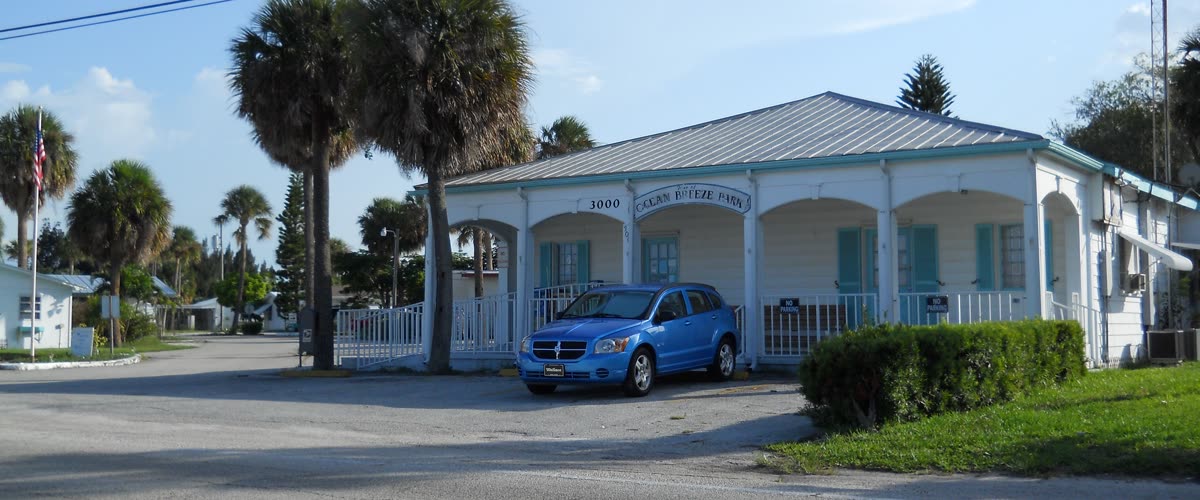
Downsizing to a mobile home in Florida: park rules for Tampa buyers
Downsizing to a mobile home in Florida often means buying the home but renting the lot under it, and that changes the paperwork. This guide explains what a Tampa-area buyer should read before an offer: the park prospectus, lot rent rules, park approval, how the home is titled and taxed and the federal wind zone it was built for.
General information, not legal, tax or lending advice. Rules on this page come from Chapter 723, Section 193.075 and Section 320.0815 of the 2026 Florida Statutes, Title 24 of the Code of Federal Regulations and the Florida Department of Business and Professional Regulation, read in November 2026. A Florida attorney, the Hillsborough County Property Appraiser or Tax Collector or a lender answers questions about a specific home.
Downsizing to a mobile home in Florida: two kinds of ownership
For some owners, a manufactured home is a way to move into less space with less upkeep. Before you compare floor plans, find out what you would actually own, because it decides which rules apply.
- Home only, lot rented. You own the home and rent the land from a park owner. The Florida Mobile Home Act, Chapter 723 of the Florida Statutes, governs that relationship. Most of this guide is about it.
- Home and land together. You own the home and the lot it sits on, sometimes inside a subdivision with an association. The land is real estate, and the home can be taxed as real property (see the tax section below).
- Resident-owned communities. Some parks are owned by the residents, often through a cooperative or association. The documents and costs work differently, so ask what a buyer receives: a share, a membership, a lot or a lease.
The listing alone does not always say which one you are looking at. Ask the seller, ask the community office and have your closing agent or attorney confirm it from the title documents. If you are still choosing between home types, our guide to a condo, townhome, villa or single-family home compares upkeep, shared walls and who maintains what.
Read the park prospectus first
In a rental park, the prospectus is the document that tells you how the park says it will operate. Section 723.011 sets the rules:
- A park with 26 or more lots must file a prospectus with the state division and deliver an approved prospectus to the homeowner before an enforceable lot rental agreement.
- The park must give a copy of the prospectus, with all of its exhibits, to each prospective lessee before the rental agreement is signed or at occupancy, whichever comes first.
- Once the prospectus is delivered, the lot rental agreement is voidable by the new lessee for 15 days.
- The statute calls the prospectus a disclosure document intended to protect homeowners and prospective homeowners, and says its purpose is to disclose the park owner's representations about how the park operates.
Read it with a highlighter. Look for what the lot rent includes, which utilities and services are part of it, how future increases are figured, which costs can be passed through to you and the park's rules on pets, guests, vehicles, sheds and home improvements.
Source: Section 723.011, Florida Statutes.
Lot rent: what the agreement must say and how it can rise
Lot rent is the cost that keeps coming after you buy, so it belongs in your budget next to insurance and utilities. Section 723.031 sets ground rules for the rental agreement:
- The rental agreement must state the lot rental amount and the services included.
- A park owner may not offer a rental term shorter than 1 year, apart from a shorter first term used to line up all agreements in the park.
- Apart from the lot rental amount, the homeowner has no financial obligation to the park as a condition of occupancy, though user fees the homeowner chooses to incur can be agreed.
- An increase may not be arbitrary or discriminatory between similarly situated tenants.
- Property taxes, non-ad valorem assessments and utility charges can be passed on in some circumstances, for example where that was disclosed before the tenancy.
The 90-day notice
Section 723.037 requires written notice to each affected homeowner, and to the homeowners' association board if there is one, at least 90 days before any increase in lot rental amount, reduction in services or utilities or change in rules. The homeowner's right to that notice cannot be waived. A committee of up to five homeowners can meet with the park owner to discuss the reasons, and the statute provides for mediation.
Before you buy, ask the seller for their recent lot rent notices. They show how rent has moved in that park, which is more useful than any average. Our guide on HOA fees in Tampa covers the association costs you may face if the home sits in an owned-lot community instead.
Sources: Section 723.031, Florida Statutes; Section 723.037, Florida Statutes.
Park approval when you buy a resale home
Buying a home already in a park is a two-part deal: one contract with the seller, and a tenancy the park must approve. Section 723.059 covers it:
- A buyer may become a tenant if they meet the park's entry requirements under its rules, subject to the park owner's approval, which may not be unreasonably withheld.
- Properly adopted rules can provide for screening prospective buyers.
- The buyer may cancel or rescind the purchase contract if the park has not approved the tenancy 5 days before closing.
- A buyer who will live in the park can assume the rest of the seller's rental agreement term and may assume the seller's prospectus.
- When the assumed agreement ends, the park may raise the rent for the new owner, as long as the increase was disclosed before occupancy and follows the buyer's prospectus and the chapter.
- Lifetime leases and automatic renewal provisions are not assumable unless the rental agreement says so or the buyer is the homeowner's spouse.
In practice: get the park's application, rules and prospectus at the start, ask the office how long approval takes and build that time into the contract. Ask in writing what the lot rent will be for you after any assumed term ends.
Source: Section 723.059, Florida Statutes.
If the park owner changes the use of the land
Owning a home on someone else's land carries one risk a house on your own lot does not: the land can be redeveloped. Section 723.061 lists the limited grounds on which a park can evict, and one is a change in the use of the land from mobile home lot rentals to another use. The statute attaches conditions:
- Where a homeowners' association is formed and operating under the chapter, the park owner must first give it written notice of its right to buy the park at the stated price and terms. The association has 45 days to deliver a contract.
- Affected homeowners must receive at least 6 months' notice of the eviction and of the need to find other accommodations.
- Within 20 days of giving that notice, the park owner must send a copy to the state division, which passes it to the Florida Mobile Home Relocation Corporation.
This page does not predict which parks may change use. When you look at a park, ask whether it has a homeowners' association under the chapter and whether residents have received any notice of a change in use. Moving a home is a separate decision with its own costs; ask a licensed installer and the community you would move to before counting on it.
Sources: Section 723.061, Florida Statutes; Florida DBPR, Mobile Homes.
Title, stickers and property tax
How a manufactured home is taxed depends on the land under it. Section 193.075 says:
- A mobile home is taxed as real property if its owner also owns the land and the home is permanently affixed. The statute treats a home as permanently affixed if it is tied down and connected to the normal utilities.
- A home taxed as real property gets an "RP" series sticker under section 320.0815, which the Tax Collector issues on a certificate from the Property Appraiser.
- A home not taxed as real property must carry a current mobile home license plate or sticker. Without one, it is presumed to be tangible personal property.
On a rented lot, then, you will usually renew a sticker for the home rather than receive a real estate tax bill for land. On an owned lot, the home and land can appear on the Hillsborough County tax roll together, and the homestead rules in our guide to Florida homestead exemption requirements become relevant. Whether a particular home qualifies for any exemption is a question for the Property Appraiser.
Ask your closing agent how ownership of the home will be transferred and recorded, and make sure the seller's paperwork matches the home's serial number on its data plate. Lending on manufactured homes differs from lending on site-built houses; talk to a lender who handles them before you make an offer that depends on a loan.
Sources: Section 193.075, Florida Statutes; Section 320.0815, Florida Statutes.
Wind zones and the data plate
Manufactured homes are built to a federal code, the Manufactured Home Construction and Safety Standards in 24 CFR Part 3280. That code includes wind design zones, and the zone matters on the Gulf coast.
- Where Hillsborough County falls. Under 24 CFR 3280.305, Wind Zone II (100 mph design wind speed) covers all Florida counties except 14 that the rule lists as Wind Zone III (110 mph). Pinellas and Manatee are on the Wind Zone III list; Hillsborough and Pasco are not, so they are in Wind Zone II.
- The data plate. Under 24 CFR 3280.5, each manufactured home must carry a data plate near the main electrical panel or another accessible spot, showing the manufacturing plant, serial number, model and date of manufacture, among other things. Find it on your first visit and photograph it.
If you are comparing a home in Hillsborough County with one across the bay in Pinellas, check that each was built for the zone it sits in. Then get an insurance quote before you commit: our guide on hurricane and flood insurance when downsizing explains how wind and flood coverage are priced and why flood is a separate policy.
Sources: 24 CFR 3280.305, Structural design requirements; 24 CFR 3280.5, Data plate.
Where the state can help
The Division of Florida Condominiums, Timeshares and Mobile Homes, part of the Department of Business and Professional Regulation, oversees the parks Chapter 723 covers. Its mobile homes page describes its work in education, complaint resolution, mediation, arbitration and developer disclosure. It also lists what the division can and cannot act on, such as improper or untimely notice of a lot rent increase. Read that list before you contact it.
Source: Florida DBPR, Division of Florida Condominiums, Timeshares and Mobile Homes.
A pre-offer checklist for a Tampa-area mobile home
| Ask for | Why it matters |
|---|---|
| Whether the lot is rented or owned | Decides whether Chapter 723 applies and how the home is taxed. |
| The prospectus with all exhibits | Shows what the lot rent includes and how increases and pass-through charges work. |
| The seller's current rental agreement and recent rent notices | Shows the rent you may assume and how it has moved. |
| The park's rules and buyer application | Approval must come before closing; the 5-day rule protects you if it does not. |
| Whether a homeowners' association exists under the chapter | It has a role in rent discussions and a right of first offer if the park changes use. |
| A photo of the data plate | Confirms the serial number, manufacture date and the standards the home was built to. |
| The current sticker and tax status | Shows whether the home is taxed as real property or carries a mobile home sticker. |
| An insurance quote | Wind and flood coverage can change the monthly cost more than the price does. |
Then add it up. Our guide to estimating net proceeds on a Tampa sale shows what you are likely to take from your current home, and costs and money collects the other numbers that shape a downsizing budget. If you are weighing a lease instead, see renting or buying after downsizing.
Talking it through with someone local
Rules on paper are only part of the picture; each park runs differently. If you would like an introduction to an agent on the operating team at eXp Realty, you can get matched. For age-restricted options more broadly, see our list of 55+ communities around Tampa.
Questions people ask
Do I own the land when I buy a mobile home in a park?
Usually not. In a rental park you buy the home and rent the lot under it from the park owner. Chapter 723, Florida Statutes, governs that landlord and homeowner relationship. Some communities sell the home and the land together, or are owned by the residents. Ask the seller and the park which kind of community it is, and confirm it on the deed or title before you sign.
How much notice must a Florida park give before raising lot rent?
Section 723.037, Florida Statutes, requires the park owner to give written notice at least 90 days before any increase in lot rental amount, reduction in services or utilities or change in rules. A homeowner cannot waive that notice. The statute also sets out a meeting between a homeowners' committee and the park owner to discuss the change, and a path to mediation.
Can a mobile home park refuse to approve me as a buyer?
A park may screen buyers under properly adopted rules, but section 723.059 says approval may not be unreasonably withheld. The same section lets a buyer cancel the purchase contract if the park has not approved the tenancy 5 days before closing. Ask for the park's application and rules early, and allow time in the contract for approval.
Is a mobile home taxed as real estate in Florida?
It depends on who owns the land. Section 193.075 says a mobile home is taxed as real property when its owner also owns the land and the home is permanently affixed, meaning tied down and connected to utilities. That home gets an "RP" sticker. A home on a rented lot carries a mobile home sticker instead. The Hillsborough County Property Appraiser and Tax Collector can confirm how a specific home is handled.
What happens if the park owner sells the land for another use?
Section 723.061 lets a park owner evict for a change in the use of the land, but only after giving affected homeowners at least 6 months' notice. Where a homeowners' association exists under the chapter, the owner must first offer it a chance to buy the park at the stated price. The notice also goes to the state division, which passes it to the Florida Mobile Home Relocation Corporation.
Which HUD wind zone is Hillsborough County in?
Under 24 CFR 3280.305, every Florida county is in Wind Zone II except 14 counties the rule lists as Wind Zone III, including neighboring Pinellas and Manatee. Hillsborough and Pasco are not on that list, so they fall in Wind Zone II. The data plate inside a manufactured home records the standards it was built to; check it against where the home sits.
Related guides
- HOA fees in Tampa: what sellers must provide and buyers should checkHOA and condo fees in Tampa: the disclosure summary and documents a seller provides, Florida estoppel fee caps and deadlines, how late fees become liens and what to check first.
- Condo fees in Florida: what they cover, why they rise and how to compareWhat a Florida condo fee pays for, why it climbs, how special assessments, HOA dues and CDD fees differ, and which documents show the real number before you offer.
- Condo, townhome, villa or single-family? Choosing a smaller home in TampaWhat condo, townhome, villa and single-family really mean under Florida law, and how maintenance, insurance, fees, rules and stairs compare around Tampa.
- Downsizing to a condo in Tampa: what to check before you buyMilestone inspections, reserve studies, the 7-day review period, estoppel fees and insurance: what Florida condo law means for a Tampa buyer in 2026.
Plan your move
We can introduce you to a licensed Tampa area agent with eXp Realty who works with homeowners moving to less house. Tampa Downsizing is operated by licensed agents affiliated with eXp Realty and is not a Florida brokerage.