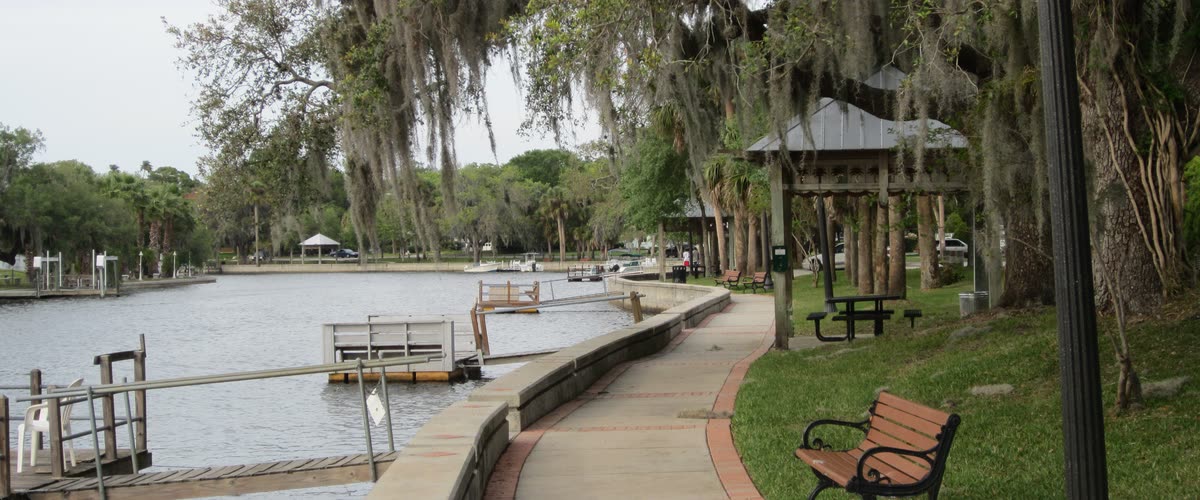
Wesley Chapel 55+ communities: how to check the age rules, HOA and Pasco taxes
Wesley Chapel 55+ communities sit in Pasco County, so Pasco's Property Appraiser and Tax Collector handle your exemptions and your tax bill. Each one also has to meet the same federal and Florida age tests, and each one has its own governing documents. This guide explains those tests, the papers Florida law says you should see before you sign and the Pasco exemptions that apply in 2026. It does not name, rank or price any community.
About this guide. It names no communities on purpose. Amenities, fees and rules change from phase to phase, and a community's age policy is only as good as the documents behind it. Here you get the federal and Florida tests, the Florida HOA disclosures and the Pasco County tax rules, so you can check any community yourself. Tampa Downsizing introduces homeowners to agents on the operating team at eXp Realty, so our introductions are not a search of the whole market.
Wesley Chapel 55+ communities are in Pasco County
Wesley Chapel sits north of Tampa across the county line, and the Pasco County Tax Collector lists a Wesley Chapel office among its locations. For a buyer coming from Hillsborough County, that changes the Property Appraiser who grants your homestead, the senior exemption rules and the office that sends your tax bill. Check the parcel's Pasco record for its taxing districts, including any special district, before you write an offer. For a wider look at the region, our 55+ community profiles across Hillsborough and Pasco describe individual communities and the questions to ask each association.
Sources: Pasco County Tax Collector, office locations; Pasco County Property Appraiser, Homestead Exemption.
How 55+ age rules work in Wesley Chapel communities
The federal Fair Housing Act bars discrimination based on familial status, and housing for older persons is exempt from that part of the law. HUD's rules at 24 CFR part 100 set out what a 55+ community must do to claim the exemption. Florida's version is section 760.29(4) of the Florida Statutes, and it uses the same three tests.
| Test | What the rule requires | What to ask for |
|---|---|---|
| Occupancy | At least 80 percent of occupied units must be occupied by at least one person 55 or older | The latest summary of the community's occupancy survey |
| Intent | The community must publish and follow policies and procedures showing it intends to operate as housing for people 55 or older | The recorded covenants, the written age policy and the association rules |
| Verification | Ages must be verified through reliable surveys and affidavits, with updates at least once every two years | The date of the last survey update and the proof of age the association accepts |
A temporarily vacant home still counts as occupied if its primary occupant has lived there during the past year and intends to return on a periodic basis, which can matter for owners who live there part of the year. The rule also says phrases such as "adult living" or "adult community" in advertising are not consistent with an intent to operate as 55+ housing. Accepted proof of age includes a driver's license, birth certificate or passport, or a signed certification from a household member 18 or older that at least one person in the unit is 55 or older.
One part of the rule is easy to use: a summary of the occupancy surveys must be available for inspection on reasonable notice and request by any person. Ask for it, and ask when it was last updated.
55+ and 62+ are different tests
Section 760.29 also exempts housing intended for, and solely occupied by, persons 62 or older. That is a separate test, and it turns on every resident rather than one per home. If a community describes itself as 62+, ask which test it uses and read the documents with that in mind.
Younger household members, guests and caregivers
The federal test is a floor. Each community may decide the age restriction, if any, for units without a resident 55 or older, and the rule permits units occupied by younger people needed to provide a reasonable accommodation to residents with disabilities. Guest stays and what happens when the qualifying resident dies or moves are set by each community's documents. Ask the association to confirm in writing how it would treat your household.
Sources: 24 CFR 100.305, 80 percent occupancy (eCFR); 24 CFR 100.306, intent (eCFR); 24 CFR 100.307, verification of occupancy (eCFR); s. 760.29(4), F.S..
Buying in a Wesley Chapel 55+ community that is still being built
New phases bring a few questions that a resale in an older community does not. HUD's rule says newly constructed housing does not have to meet the 80 percent test until at least 25 percent of its units are occupied. In an early phase, the recorded documents tell you more about how the community will run than a tour does.
The developer often keeps control for a while too. Florida's required HOA disclosure summary warns that the developer may have the right to amend the restrictive covenants without the approval of the association membership or the parcel owners. Ask when control of the association is expected to pass to the owners, and which rules the developer can still change.
If the community sits inside a community development district, section 190.048 of the Florida Statutes requires each initial sale contract to carry a bold disclosure that the district may impose taxes or assessments on the property, set each year by its board and in addition to county taxes. Read it before you sign, and ask the district for its current charges on the lot.
Sources: 24 CFR 100.305(d) (eCFR); s. 720.401, F.S.; s. 190.048, F.S..
HOA documents to read before buying in a Wesley Chapel 55+ community
A community run by a homeowners' association falls under Chapter 720 of the Florida Statutes. Condominiums are covered by a different chapter, so confirm which kind of association governs the home first. Chapter 720 gives buyers and owners several documents to rely on.
The disclosure summary under section 720.401
A prospective buyer must be given a disclosure summary before signing the contract. It states that you must join the association, that recorded covenants govern use and occupancy, that you will owe assessments that may change and that unpaid assessments could result in a lien. The developer gives it on a new sale and the owner gives it on a resale.
If you do not get the summary before signing, the law lets you void the contract by written notice within 3 days after you receive it or before closing, whichever comes first. That right cannot be waived, and it ends at closing.
The estoppel certificate under section 720.30851
Before closing, the association issues an estoppel certificate within 10 business days after a request from the owner, the lender or a designee. The form the statute sets out is useful to a buyer because it answers questions in writing:
- The regular assessment, how often it is paid and what is owed on the parcel
- Any capital contribution fee, resale fee, transfer fee or other fee due, with the amount
- Any open violation noticed to the owner
- Whether the board must approve the transfer, and whether it has
- Any right of first refusal
- A list of all other associations the parcel belongs to, with contact information
- Contact information for the association's insurance
A certificate delivered by hand or electronically is effective for 30 days, and one sent by regular mail for 35 days. Read the line listing other associations closely, because a parcel can belong to more than one.
Official records once you own
Section 720.303 requires the association to keep official records in Florida for at least 7 years and make them available to a parcel owner within 10 business days after a written request. Before you buy, ask the seller for the current budget and recent board minutes. Our guide to condo and HOA fees in Florida explains how budgets, reserves and special assessments fit together.
Sources: s. 720.401, F.S.; s. 720.30851, F.S.; s. 720.303, F.S..
HOA dues, CDD assessments and the Pasco tax bill
Dues and district charges differ by community and phase and change over time. Get each one in writing from the source that sets it.
| Cost | Who sets it | Where to see it |
|---|---|---|
| HOA assessments and special assessments | The association's board, under the governing documents | The disclosure summary, the budget and the estoppel certificate |
| Transfer, resale or capital contribution fees | The governing documents | The estoppel certificate |
| CDD or other special district charges | The district's governing board, each year | The district, and the parcel's tax bill |
| Property taxes | Each taxing authority's millage, applied to taxable value | The Pasco County Tax Collector's records for the parcel |
The Pasco County Tax Collector explains how a bill is built: assessed value minus exemptions gives taxable value, taxable value times the millage rate gives the tax, and all special assessments are then added. It also notes that some special districts levy a dollar amount per lot within their boundaries. Exemptions are subtracted before the millage is applied, while special assessments are added afterward.
Florida law sets early payment discounts of 4 percent in November, 3 percent in December, 2 percent in January and 1 percent in February, with no discount in March. The Tax Collector says taxes become delinquent April 1. Ask the closing agent how the year's taxes and any district charges are prorated.
Sources: Pasco County Tax Collector, Understanding Your Tax Notice; s. 197.162, F.S., tax discount payment periods.
Pasco County homestead and senior exemptions in Wesley Chapel
The Florida Department of Revenue says a homestead exemption can reduce a home's taxable value by as much as $50,000 and qualifies the home for the Save Our Homes assessment limitation. In Pasco, the Property Appraiser says the home must be your primary residence on January 1, ownership must be in place by January 1 and the deadline to file for the current year is March 1. The office accepts homestead applications online.
| Benefit | Who qualifies | Amount or limit | Deadline |
|---|---|---|---|
| Homestead exemption | Owner whose permanent residence it is on January 1 | Up to $50,000 off taxable value | March 1 |
| Pasco additional senior exemption | At least one owner 65 or older on January 1, with homestead and household income within the limit | Additional $50,000; 2026 income limit $38,686; county operating levies only | March 1 to apply; income information by June 1 |
| Save Our Homes | Homesteaded homes after the first year | Assessment may rise no more than 3 percent or the change in the CPI, whichever is less | Applies automatically with homestead |
The Pasco senior exemption is narrower than it sounds. The Property Appraiser says it applies only to county operating levies, not to other county levies such as MSTUs or bonds, and not to other taxing authorities. Household income means adjusted gross income as defined in the Internal Revenue Code, and the limit is published by the Florida Department of Revenue and subject to change each year. The Property Appraiser's homestead page says applications for this exemption must be submitted in person. Exemption rules can change by law, so confirm the current figures with the office before you count on them.
Sources: Florida Department of Revenue, property tax exemptions; Pasco County Property Appraiser, Homestead Exemption; Pasco County Property Appraiser, Senior (Aged 65+); Florida Department of Revenue, PT-112, Save Our Homes and portability (R. 08/24).
Selling your current home before moving to Wesley Chapel
Moving from a Florida homestead to a Wesley Chapel 55+ community can carry part of your tax savings with you. The Department of Revenue says you may be able to transfer, or "port," all or part of your Save Our Homes benefit to the new homestead. To do that you must establish a homestead exemption on the new home within three years of January 1 of the year you abandoned the old one, not three years after the sale, and file Form DR-501T with the homestead application, Form DR-501, by March 1. Our Florida homestead portability guide walks through the forms and the timing.
The new home's own Save Our Homes cap starts fresh. The Department of Revenue says a change of ownership removes the benefit and the home is assessed at just value on the following January 1, so the seller's tax bill is not a guide to yours.
On the federal side, the IRS says you may be able to exclude up to $250,000 of gain from the sale of your main home, or up to $500,000 on a joint return, if you meet the ownership and use tests: owning and living in the home for at least 24 months of the 5 years before the sale. A CPA can tell you how the rules apply to your sale.
Sources: Florida Department of Revenue, PT-112; IRS Topic no. 701, Sale of your home.
Medicare plans when you move to Pasco County
A move across the county line can affect a Medicare Advantage or drug plan. Medicare says that if you move outside your plan's service area, or to an address in the area with new plan options, you can switch plans. The window begins when you move and continues for 2 full months afterward, or begins the month before if you tell your plan before you move. Check which plans serve the new ZIP code, and whether your doctors are in network there, before you close.
Source: Medicare.gov, Special Enrollment Periods.
Storm and flood checks for a Wesley Chapel address
Never assume a whole community shares one evacuation or flood zone. Look up the exact home on Pasco County's evacuation zone finder, then check the flood zone on the FEMA Flood Map Service Center. Ask for the wind mitigation report and the roof's age, and get insurance quotes before your inspection period ends.
Questions to ask any Wesley Chapel 55+ community
- Does the community operate under the 55+ test or the 62+ test, and can I see the written age policy?
- When was the occupancy survey last updated, and may I see its summary?
- What are the rules for household members under 55, guest stays and live-in caregivers?
- How many associations does this home belong to, and what does each one charge?
- Is the home inside a community development district, and what are its current charges on this lot?
- Is there a capital contribution, resale or transfer fee at closing?
- Is the developer still in control of the association, and which rules can it still change?
- Are any special assessments planned, and what are the rules on rentals and golf carts?
Where to report a 55+ housing problem
HUD's Office of Fair Housing and Equal Opportunity takes reports online, by phone or by mail, and its intake line is 1-800-669-9777. HUD lists homeowners associations among those an allegation can be filed against, and says an allegation under the Fair Housing Act must be filed within one year of the last date of the alleged discrimination. For disputes over association documents or records, ask a Florida attorney.
Sources: HUD, Report Housing Discrimination; HUD, FHEO intake and investigation process.
General information, not legal or tax advice. We read the federal, Florida and Pasco County sources linked above in October 2026. Statutes, exemption limits and association rules change. Confirm figures with the office that sets them, have a lawyer licensed in Florida review the governing documents and ask a CPA about your sale.
Selling first and buying in Wesley Chapel
Timing the sale of your current home against a purchase in Pasco takes some planning, especially with a new-construction delivery date. If you would like an introduction to an agent on the operating team at eXp Realty, you can get matched.
Questions people ask
Is Wesley Chapel in Hillsborough or Pasco County?
Wesley Chapel is in Pasco County, and the Pasco County Tax Collector runs an office there. That means Pasco's Property Appraiser handles your homestead and senior exemption applications and Pasco's Tax Collector sends the tax bill. Addresses near the county line can be confusing, so confirm the county and the taxing districts on the parcel's own property record before you make an offer.
What makes a Wesley Chapel community legally 55+?
Federal and Florida law use the same three tests. At least 80 percent of occupied units must have at least one resident 55 or older, the community must publish and follow policies showing it intends to operate as 55+ housing and it must verify ages through reliable surveys and affidavits. A "55+" label in marketing is not enough on its own. Ask for the written age policy and the latest survey summary.
Can someone under 55 live in a Wesley Chapel 55+ community?
Sometimes. The federal rule requires a resident 55 or older in at least 80 percent of occupied units and lets each community set its own age rule, if any, for the remaining units. Some communities allow younger household members and others are stricter. Rules on guests and live-in caregivers also differ. Read the recorded covenants and the association rules, and ask the association to state in writing how it would treat your household.
What is a CDD assessment in a Wesley Chapel community?
A community development district is a special district that can levy taxes or assessments to pay for public facilities and services. Florida law requires the initial sale contract for a parcel inside one to carry a bold disclosure saying so, and that these charges are in addition to county taxes. On a resale, ask the seller for the latest tax bill, which shows any district charges, and ask the district itself how long they run.
Which senior tax exemption can I get in Wesley Chapel?
The Pasco County Property Appraiser offers an additional homestead exemption of $50,000 for owners 65 or older on January 1 who qualify for homestead and meet a household income limit, which is $38,686 for 2026. It applies only to county operating levies, not to school taxes or other authorities. The application deadline is March 1, and income information is due by June 1.
Related guides
- HOA fees in Tampa: what sellers must provide and buyers should checkHOA and condo fees in Tampa: the disclosure summary and documents a seller provides, Florida estoppel fee caps and deadlines, how late fees become liens and what to check first.
- Condo fees in Florida: what they cover, why they rise and how to compareWhat a Florida condo fee pays for, why it climbs, how special assessments, HOA dues and CDD fees differ, and which documents show the real number before you offer.
- Condo, townhome, villa or single-family? Choosing a smaller home in TampaWhat condo, townhome, villa and single-family really mean under Florida law, and how maintenance, insurance, fees, rules and stairs compare around Tampa.
- Downsizing to a condo in Tampa: what to check before you buyMilestone inspections, reserve studies, the 7-day review period, estoppel fees and insurance: what Florida condo law means for a Tampa buyer in 2026.
Plan your move
We can introduce you to a licensed Tampa area agent with eXp Realty who works with homeowners moving to less house. Tampa Downsizing is operated by licensed agents affiliated with eXp Realty and is not a Florida brokerage.