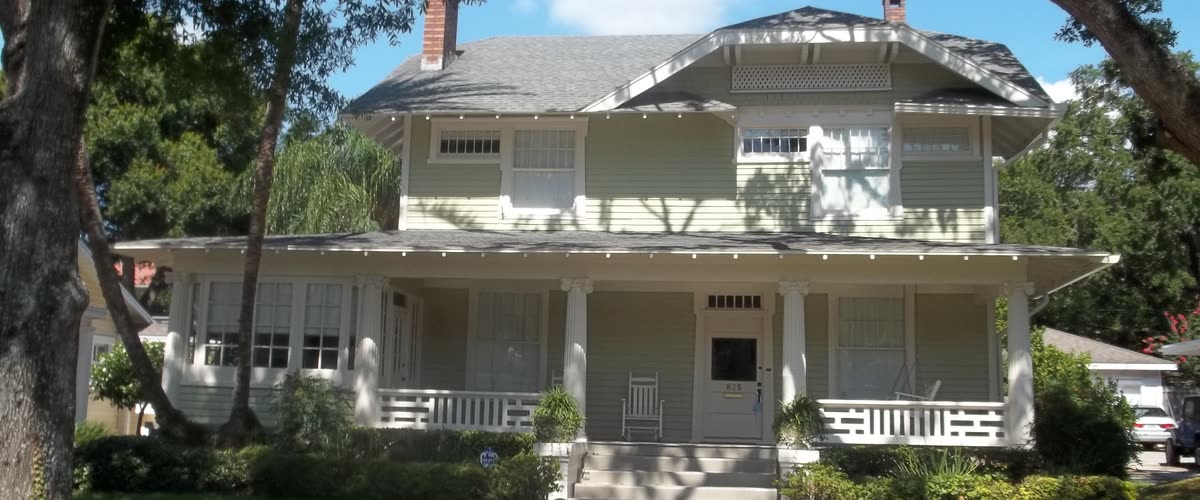
Downsizing with kids still at home: planning a smaller Tampa home
Downsizing with kids still at home means planning a smaller house around a household that is still full. This guide helps a Tampa owner count the rooms the household really needs, plan storage and shared space, time the sale around school and work schedules and understand the IRS and Florida homestead rules that come with selling one home and buying another.
General information, not tax or legal advice. Figures on this page come from the IRS, the Florida Department of Revenue, the Florida Statutes, the Electronic Code of Federal Regulations and the Hillsborough County Property Appraiser, read in November 2026. A CPA, a Florida attorney or the county office answers questions about your own situation.
Why some owners downsize with kids still at home
Most downsizing advice assumes the children have already moved out. Some owners do not wait, for practical reasons: the house costs more to cool, insure and repair than the budget comfortably allows, the yard or pool takes more time than anyone has, or the owner wants to move equity out of the house and into savings or a lower mortgage.
The trade-off is plain: fewer spare rooms and less storage while the household is still full, against carrying the larger house for longer. The useful question is whether a specific smaller home can work for the people who live with you now, and for the next few years.
If your household has already shrunk, our guide on downsizing after kids move out covers that situation.
How many bedrooms you need when you downsize with kids at home
Take stock of how the household sleeps, works and stores things today, then project it forward a few years.
Count people and routines, not rooms
- Who needs a room of their own, and who could share without strain.
- Who works or studies from home, and whether that needs a door that closes.
- How many people get ready at the same time in the morning, which tells you more about bathrooms than the bedroom count does.
- Who is likely to leave in the next few years for college, work or a place of their own, and who may come back for summers or between jobs.
- How many vehicles the household parks, and whether the new home has room for them.
Layouts that stretch a smaller floor plan
When you tour, look at how the rooms connect, not only how many there are.
- A flexible room. A den, loft or bonus room that can serve as a bedroom now and an office or guest room later.
- Separation between bedrooms. A split plan, with the primary bedroom on one side of the living area and the others on the opposite side, or bedrooms on different floors, gives each part of the household some quiet.
- A second full bathroom near the secondary bedrooms.
- Built-in storage, such as a garage with shelving room, closets in every bedroom and a usable laundry area.
Our guide to choosing a condo, townhome, villa or single-family home compares the trade-offs of each home type, including stairs, shared walls and which parts an association maintains.
Sort before you shop
With a full household, sorting is a shared job. Give each person a deadline and a fixed amount of space in the new home, and let them decide what fills it. Start with rooms nobody uses, duplicate furniture and outgrown toys and sports gear. Measure large pieces before deciding they will come along. Our guide on what to keep when downsizing, room by room gives decision rules for furniture and keepsakes.
When adult children still live at home
An adult child living at home changes the plan in a different way. Talk through expectations before you settle on a floor plan.
- Their timeline. Ask whether they expect to stay a few months or several years. The answer can decide between a two-bedroom and a three-bedroom home.
- Their belongings. Furniture and boxes that will leave with them do not need space in your next home. Agree on what moves, what goes into their own storage and who pays for it.
- Shared costs. If they contribute to rent, utilities or groceries now, decide whether that continues in the new home.
- Title. Adding anyone to the deed of the new home can have legal and tax consequences. Talk to a Florida attorney before anyone else goes on the title, and see the homestead section below.
Timing the sale around the household calendar
Moving a full household is harder to schedule than moving two people. School terms, exams, work schedules, sports seasons and graduations all compete for the same weeks. Mark the dates you cannot move on a calendar first, then work backward to a listing date.
Buy first, sell first or line them up
You will also need to decide the order of the two transactions. Selling first gives you a firm budget but may mean a short-term rental and two moves with everyone in tow. Buying first avoids a second move but can mean carrying two homes. Our guide on whether to buy first or sell first when downsizing lays out each path and the contingencies that bridge them.
January 1 matters
Florida ties the homestead exemption to January 1. The Hillsborough County Property Appraiser says an owner must hold legal or beneficial title by January 1 of the year of the application, make Hillsborough County their legal domicile and live on the property as of January 1. A closing date shortly before or after the new year can change which year your new homestead begins, so check the calendar before you agree to a closing date.
Money rules when you sell: the federal home sale exclusion
The Florida Department of Revenue says Florida does not impose a personal income tax, so there is no state income tax on the gain from selling your house. Federal rules still apply. IRS Topic 701 and Publication 523 set them out:
- The exclusion. You may exclude up to $250,000 of gain from the sale of your main home, or up to $500,000 if you file a joint return with your spouse.
- The ownership test. You owned the home for at least 24 months (2 years) out of the 5 years before the sale.
- The use test. You used the home as a residence for at least 24 months of the previous 5 years. On a joint return, each spouse must meet the use test.
- Once every 2 years. Publication 523 says you may take the exclusion only once during a 2-year period.
- One main home. An individual has only one main home at a time.
- A partial exclusion. If you do not meet the tests, Publication 523 describes a partial exclusion when the main reason for the sale was a change in workplace location, a health issue or an unforeseeable event.
If you receive Form 1099-S, Topic 701 says you must report the sale even when the gain is excludable, and you must also report it if you cannot exclude all of the gain. Reported sales go on Schedule D (Form 1040) and Form 8949. Publication 523 says to keep records that document your basis until 3 years after the due date of your return for the year you sold.
Moving costs are usually your own. IRS Topic 455 describes a moving expense deduction for active-duty members of the Armed Forces moving under a military order, and for certain intelligence community employees moving in 2026 or later, not for other homeowners.
Our guide on capital gains on a home sale in Florida walks through the gain calculation, and estimating your net proceeds on a Tampa sale shows how closing costs and a mortgage payoff reduce what you take to the next home.
Sources: IRS Topic 701, Sale of your home; IRS Publication 523, Selling Your Home; IRS Topic 455, Moving expenses for members of the Armed Forces; Florida Department of Revenue, personal income tax FAQ.
Florida homestead and portability when you move
A long-held homestead in Hillsborough County can have an assessed value well below its market value. That gap shapes the tax bill on your next home.
- The cap. The Florida Department of Revenue explains that after the first year of a homestead exemption, the assessment cannot rise more than 3 percent or the change in the Consumer Price Index, whichever is less. This is the Save Our Homes assessment limitation.
- The reset. Section 193.155, Florida Statutes, says that after a change of ownership the property is assessed at just value as of January 1 of the following year. The Hillsborough County Property Appraiser says the exemption is removed when the property is sold. The seller's bill on the home you buy reflects the seller's exemption and cap, not yours.
- Portability. You can transfer all or part of the difference between just value and assessed value to a new Florida homestead. The Department of Revenue says you must establish the new homestead within three years of January 1 of the year you abandoned the old one, not three years after the sale.
- The limit. Section 193.155(8) caps the transferred difference at $500,000. When the new home's just value is lower than the old one's, the statute sets the new assessed value at the new just value divided by the old just value, multiplied by the old assessed value.
- Filing. File Form DR-501T, Transfer of Homestead Assessment Difference, with your homestead application. The deadline for both is March 1. The Property Appraiser accepts late applications up to the 25th day after the yearly TRIM notice is mailed, which it says is typically in August. After that, it cannot accept one for that year.
Our Florida homestead portability guide covers couples, co-owners and timing closings around January 1, and the portability calculator runs the statute's formula with your own values.
Sources: Florida Department of Revenue, PT-112, Save Our Homes Assessment Limitation and Portability Transfer; Section 193.155, Florida Statutes; Hillsborough County Property Appraiser, Homestead and other exemptions.
Homestead rules when a minor child lives with you
Florida treats a homestead differently in an estate plan when the owner has a minor child. Section 732.4015, Florida Statutes, says the homestead shall not be subject to devise if the owner is survived by a spouse or a minor child or minor children. The homestead may be devised to the owner's spouse only if there is no minor child.
Buying a new home is a natural moment to review how it will be titled and whether your will or trust still does what you intend. These rules are technical and depend on facts this page cannot see. Ask a lawyer licensed in Florida to review the deed and your estate documents before closing.
Source: Section 732.4015, Florida Statutes.
Age-restricted communities and a household with children
Some owners look at 55+ communities around Tampa for the lower upkeep, then find that the rules on who may live in the home matter to their plan. Federal regulations explain why.
- Under 24 CFR 100.20, familial status means one or more individuals under 18 living with a parent or another person with legal custody, or with that person's designee given written permission.
- Under 24 CFR 100.304, the familial status provisions do not apply to housing intended and operated for persons 55 years of age or older that meets the requirements of the regulations.
- Under 24 CFR 100.305, at least 80 percent of the occupied units in such a community must be occupied by at least one person 55 years of age or older.
Within those rules, each community's governing documents decide who may live in a home and for how long. Ask for the declaration, the age verification policy and any rules on residents or guests under a set age, and read them before you make an offer.
Sources: 24 CFR 100.20, Definitions; 24 CFR 100.304, Housing for persons who are 55 years of age or older; 24 CFR 100.305, 80 percent occupancy.
Closing costs on the sale: documentary stamp tax
Florida taxes deeds that transfer real property. Section 201.02, Florida Statutes, sets the tax at 70 cents on each $100 of the consideration, which includes the money paid and the amount of any mortgage or other encumbrance. Your sales contract sets which party pays it, so ask your agent or closing agent to show it on an estimated settlement statement before you list.
Source: Section 201.02, Florida Statutes.
A working order of steps for a full household
| Stage | What to do |
|---|---|
| Thinking it over | List who sleeps, works and parks at home now and in the next few years. Collect running costs. Look up your just and assessed values on the Property Appraiser's site. |
| Planning space | Decide on bedrooms, bathrooms and a flexible room. Give each person a sorting deadline and a share of storage. |
| Setting dates | Mark school, work and family dates you cannot move on. Choose buy first or sell first. Keep January 1 in mind for the new homestead. |
| Before an offer | Get an insurance quote. Read any association or community rules on occupancy. Ask a CPA to check your gain against the federal exclusion. |
| Before closing | Confirm documentary stamp tax and other costs on the settlement statement. Have a Florida attorney review the deed and your estate documents. |
| After the move | File Form DR-501 and Form DR-501T by March 1. Report the sale on your federal return if the IRS rules require it. |
Finding a smaller home that fits the household you have
Matching a floor plan to a full household is easier with someone who knows local listings. If you would like an introduction to an agent on the operating team at eXp Realty, you can get matched.
Questions people ask
Is it a good idea to downsize with kids still at home?
It can be, if the smaller home still works for everyone who sleeps there. Common reasons to move early are lower running costs, less upkeep and freeing up equity. The trade-off is less room during the years when the household is still full. Count bedrooms, bathrooms and storage for the people living with you now and for the next few years, then compare that with what the move saves.
How many bedrooms do I need if I downsize before the kids move out?
There is no rule; it depends on how your household lives. Start with who needs a room of their own, who could share and whether anyone works from home. Then think ahead: a child leaving for college or a job may come back for summers. Some owners pick a home with one flexible room, such as a den or loft, that can serve as a bedroom now and an office later.
Do I pay tax when I sell my Florida house to downsize?
The Florida Department of Revenue says Florida does not impose a personal income tax. Federal tax can apply. IRS Topic 701 says you may exclude up to $250,000 of gain on your main home, or up to $500,000 on a joint return, if you meet the ownership and use tests of at least 24 months each in the 5 years before the sale. A CPA can check your figures.
Can I deduct moving costs when I downsize?
Most homeowners cannot. IRS Topic 455 describes the moving expense deduction for members of the Armed Forces on active duty who move under a military order for a permanent change of station. For moves in 2026 or later, it also covers certain intelligence community employees and new appointees. The page does not describe a deduction for other movers, so plan the move as an out-of-pocket cost.
Can I buy in a 55+ community if my child lives with me?
Read the community's rules first. Under 24 CFR 100.304, HUD's familial status provisions do not apply to qualifying housing for persons 55 or older, and 24 CFR 100.305 requires at least 80 percent of occupied units to have an occupant 55 or older. Each community's documents set its rules, so read them before you make an offer.
Does my homestead exemption carry over if I buy a smaller home?
The exemption itself does not move; you apply again on the new home. The Hillsborough County Property Appraiser says the exemption is removed when a homestead is sold. Portability can carry part of your Save Our Homes benefit to a new Florida homestead, up to $500,000 under section 193.155, Florida Statutes, if you file Form DR-501T with your new homestead application by March 1.
Related guides
- 55+ apartments in Tampa: how the age rules work and how to check themRenting a 55+ apartment in Tampa: the federal Housing for Older Persons Act tests, the Florida version, the lease terms to read and how to check a property before you sign.
- How to cope with downsizing: leaving the family home without regretThe emotional side of downsizing, handled practically: grief over a long-held home, disagreements, pacing, rituals for leaving and settling in afterward.
- Aging in place or downsizing in Tampa: how to decideA balanced look at staying put versus moving in Tampa: the real costs of each, local help for older homeowners and a self-assessment checklist.
- Buy first or sell first? Timing a downsizing move in TampaRent-backs, sale contingencies, bridge loans and more, plus the Tampa timing issues of hurricane season and the January 1 homestead date.
Plan your move
We can introduce you to a licensed Tampa area agent with eXp Realty who works with homeowners moving to less house. Tampa Downsizing is operated by licensed agents affiliated with eXp Realty and is not a Florida brokerage.